One interface, learned in ten minutes
Wall keypads, one app and voice control all drive the same logic. Guests can operate the lights without instructions, and nobody hunts for the right app to turn the heating up.

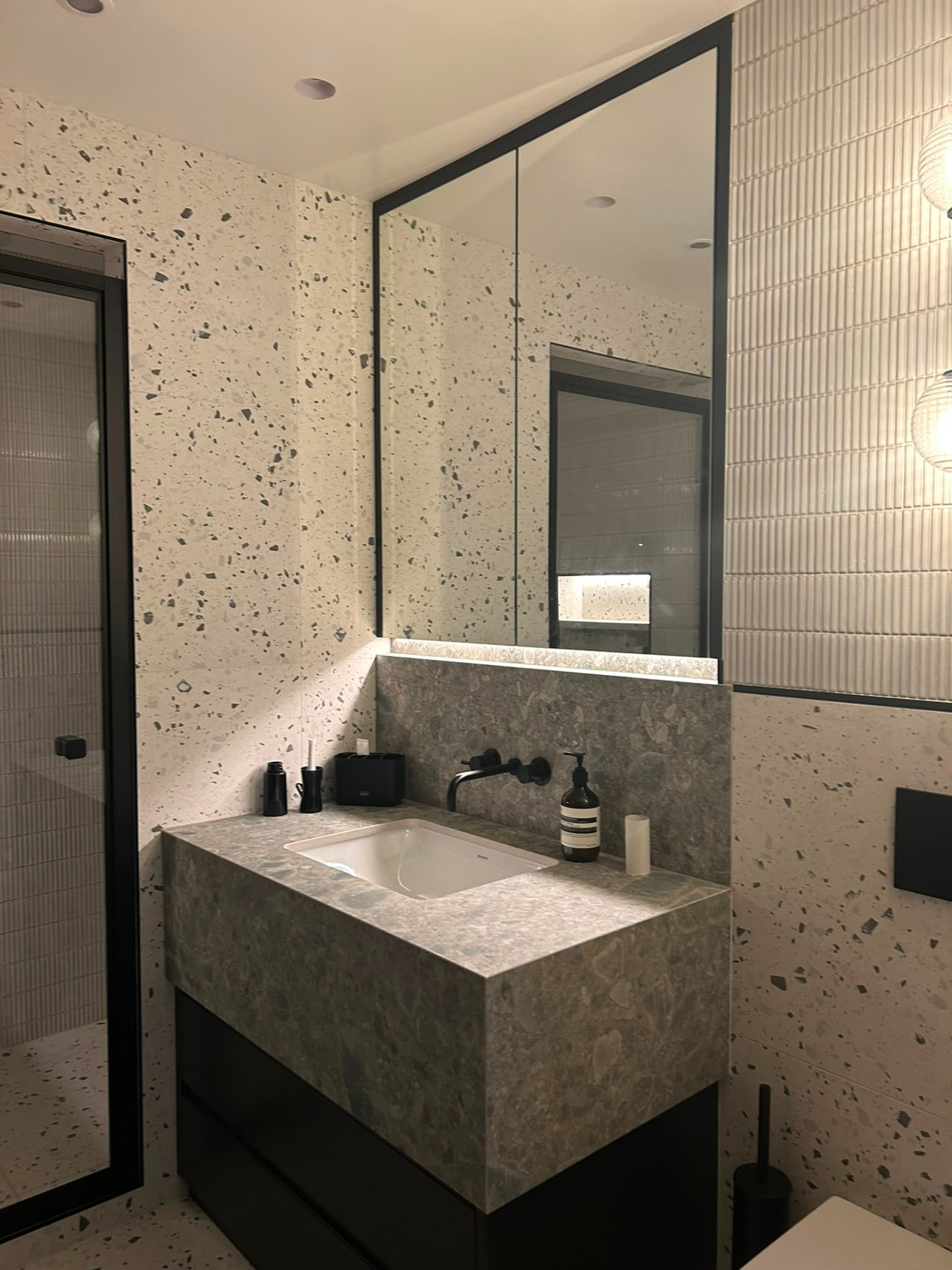
Derby · Official Loxone Partner
One system that runs lighting, heating, shading, audio, security and energy — designed, first-fixed and programmed by the same NAPIT Full Scope contractor, so the cabling and the control strategy agree with each other from day one.
16+ years in domestic, commercial and industrial control · 6-year NAPIT-backed workmanship guarantee on qualifying installations
16+ years
Domestic, commercial and industrial experience
Full Scope
NAPIT registered for all aspects of electrical work
6-year
NAPIT-backed workmanship guarantee on qualifying installs
£10m
Public and employers' liability cover
Free
Initial consultation, no obligation
The service
Smart home automation is the practice of putting every service in the building — lighting circuits, heating zones, blinds, audio, cameras, door entry, EV charging and energy monitoring — onto a single controller that understands what the house is doing rather than a collection of gadgets that each understand one thing. As an official Loxone Partner we lead with Loxone where it is the right fit, and design on Lutron, Rako, KNX, ClickSmart, HD Anywhere and Sonos where it is not.
The work begins at the consumer unit and the first fix, not at the app. A properly automated house needs lighting circuits split by function rather than by room, dedicated data runs back to a central rack, low-voltage cabling for sensors and keypads, and a control cabinet with room to grow. Get that right and the programming is straightforward. Get it wrong and no amount of software will rescue it, which is why we are an electrical contractor first and an integrator second.
It is not all or nothing. Plenty of clients start with heating control or a single floor of lighting, with the infrastructure sized so the system extends later without lifting floors twice. Others automate an entire new build from the drawings. Both routes are designed the same way — around how you actually live in the building, not around a product catalogue.
What it costs to leave it
The expensive failure in home automation is almost never a faulty product. It is a house that was plastered and decorated before anyone asked how it should behave. Once the walls are closed, adding a keypad by the door, a sensor on the landing or a data run to the plant room stops being a morning's work and becomes a chase, a re-skim and a repaint in a room you have just finished.
The second failure is fragmentation. A heating app from one supplier, cameras from another, cloud-tied speakers from a third and lighting from a fourth. Each works alone; none work together. Nothing can trigger anything else, every firmware update risks a new incompatibility, and when one manufacturer withdraws a cloud service the hardware in your wall becomes ornamental.
Then there is reliance on the internet for things that should never need it. A house that cannot switch a light on because a remote server is down is worse than a house with ordinary switches. Our systems run locally on the controller in the property, so lighting, heating and shading keep working whether the broadband is up or not, with remote access as a convenience rather than a dependency.
How the job runs
01
We walk the property or read the drawings, listen to how you want the building to behave, and tell you honestly which parts are worth automating and which are not.
02
Once you decide to progress we produce the design: system schematics, circuit splits, cable schedules, cabinet layout and the control strategy — so nothing is guessed on site.
03
Containment, mains and data cabling, back boxes, sensor positions and the control cabinet installed before plaster, all tested and labelled against the schedule.
04
Keypads, drivers, dimmers and touch interfaces fitted, then the system programmed to your scenes, schedules and automations rather than to factory defaults.
05
Full electrical testing and certification, functional testing of every scene, a walkthrough with everyone who lives there, and optional remote or in-person maintenance afterwards.
What you actually get
Wall keypads, one app and voice control all drive the same logic. Guests can operate the lights without instructions, and nobody hunts for the right app to turn the heating up.
Automation logic lives on the controller in your property. Lighting, heating, shading and door entry keep working during an outage; remote access is a bonus, not a requirement.
Heating follows presence and room temperature instead of a single hallway stat, shading limits summer solar gain, and lighting switches itself off in empty rooms — every day, without anyone remembering.
Spare capacity in the cabinet and cabling means adding cinema, cameras, EV load management or solar monitoring later is a configuration job, not a building job.
Presence simulation, leak and smoke inputs, camera events and door entry all sit in the same system, so a detected problem can shut a valve, raise the lights and alert your phone in one action.
Qualifying installation work carries a 6-year NAPIT-backed workmanship guarantee; other work carries a minimum of one year, with maintenance packages available beyond that.
In detail
Automation is a wiring discipline before it is a software one. The detail below is what we specify, install and programme most often across Derby, Derbyshire, Nottinghamshire and the wider East Midlands, and how those decisions differ between an occupied house and a project still on paper.
We are an official Loxone Partner and lead with Loxone where the project suits it, because the logic runs locally and one controller covers lighting, heating, shading, audio and security. Where a client or architect has already specified something else, or where the aesthetic demands a particular keypad range, we design on the appropriate alternative instead.
Nearly every long-term problem we are called to fix traces back to cable that was never installed. Our designs put structured cabling back to a central position, keep mains and data separated correctly, and leave documented spare capacity so the next change is cheap.
The same outcome is reachable both ways; the route differs. On a new build we specify from the drawings and everything hides in the structure. In an occupied home we plan routes through lofts, floor voids and existing risers, and use wireless or hybrid devices where a cable genuinely cannot go without damaging finishes.
Clients rarely ask for automation in the abstract. They ask for a specific irritation to stop happening. These are the jobs that come up most, and they are equally valid as a starting point or as part of a whole-house scheme.
Before you enquire
We do not publish prices, and any figure quoted before seeing a property would be misleading — a single heating zone and a whole-house Loxone install are different orders of work. The initial consultation is free, design is chargeable only once you decide to progress, and you receive a written quotation before committing to anything.
A single-room or single-service project is typically a few days. A whole-house system on a new build runs alongside the construction programme, with first fix before plaster and second fix and programming near completion. We give you the sequence and durations in writing at quotation stage so it can be planned into the build.
No. There is no fixed package. Many clients begin with heating or one floor of lighting and expand later. The important part is that the cabling and the control cabinet are designed at the start for where you want to end up, so expansion is configuration rather than construction.
We are an official Loxone Partner and recommend it where it is the right fit, because the logic runs locally and one system covers every service. We also design, install and programme Lutron, Rako, KNX, ClickSmart, HD Anywhere and Sonos when the project or the specification calls for it.
Nothing that matters. All automation logic runs on the controller inside the property, so lighting, heating, shading, door entry and scenes continue working normally. Remote access from your phone is the only thing that pauses until the connection returns.
The cabling and containment are a twenty-year asset if specified properly. Controllers and interfaces are updated in software, and we deliberately design cabinets with spare capacity so hardware can be added without replacing what is already there.
Qualifying installation work carries a 6-year workmanship guarantee backed by NAPIT. All other work carries a minimum one-year guarantee. We also hold £10m public liability, £10m employers' liability and £1m professional indemnity, and can issue RAMS for any project on request.
Yes. Remote and in-person maintenance packages are available, which is how most changes get made — a new scene, a revised schedule or an added device is usually handled remotely without a site visit.
Emergency and out-of-hours support is available on request for automation and commercial clients. It is not sold as a standard guaranteed service, but ask and we will tell you honestly what we can do for your system.
Derby and the surrounding towns including Duffield, Belper, Ilkeston, Long Eaton, Ripley, Ashbourne, Matlock, Burton upon Trent, Nottingham, Chesterfield and Sheffield. Larger automation and commercial projects often travel further — ask if you are outside that list.
Related services
Where we work
Derby · Nottingham · Duffield · Belper · Burton upon Trent · Sheffield · Ilkeston · Long Eaton and the wider East Midlands. See areas covered, read more about the company or return to the homepage.
The initial consultation is free and carries no obligation. You will get an honest view of what is worth automating, what it involves at first fix, and the sensible place to start.
NAPIT Full Scope · Official Loxone Partner · 6-year workmanship guarantee on qualifying installations · £10m public liability