Plant that runs to occupancy
Schedules, setbacks and occupancy inputs stop lighting and HVAC running outside trading or working hours, which is where most commercial energy waste sits.

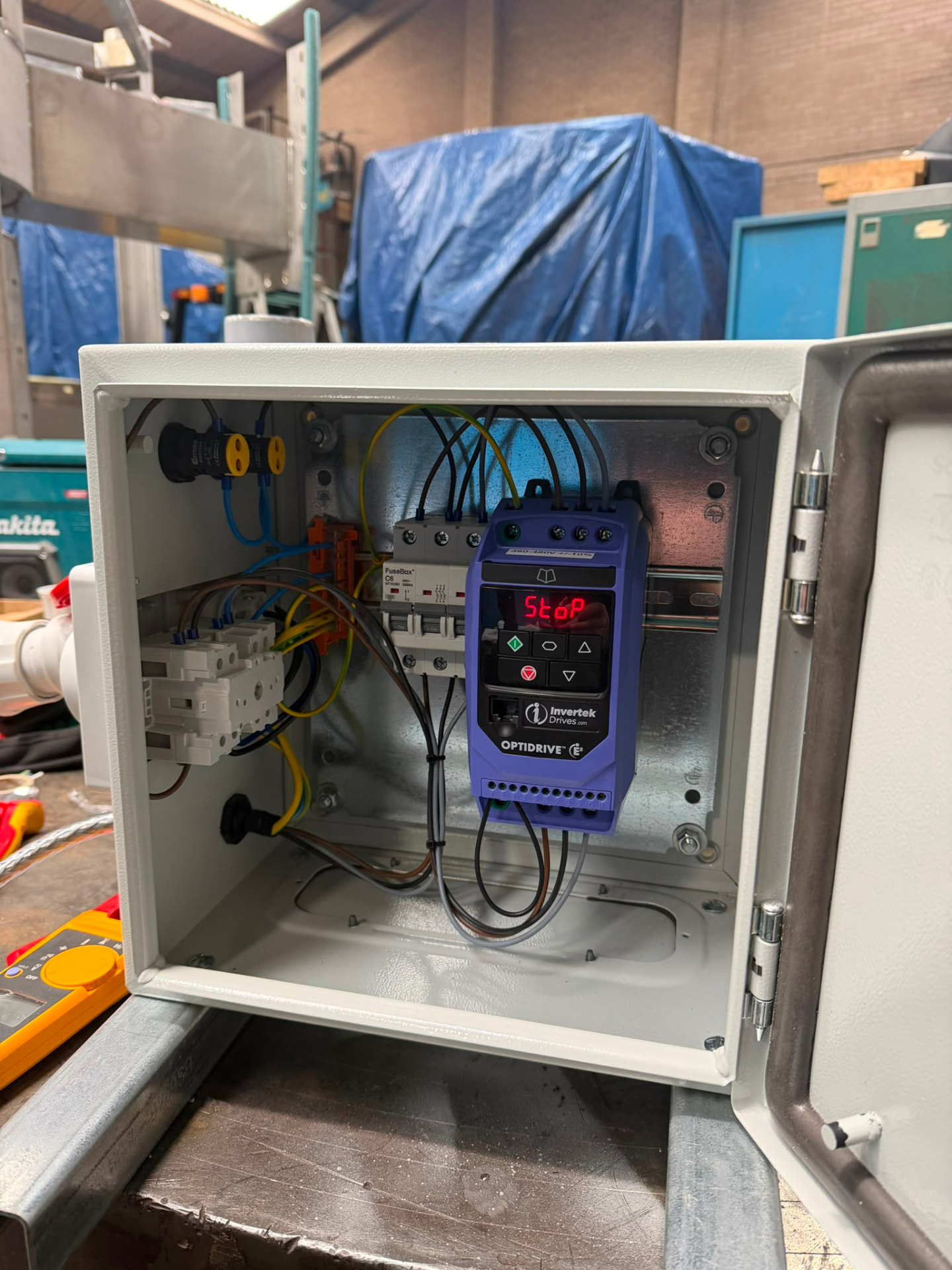
Derby · BMS, control panels and process
Building management, lighting and HVAC control, control panels and production line systems — designed, installed and commissioned by an engineer who spent years building bespoke food-handling control systems for sites worldwide.
16+ years across industrial control and building services · £10m public and employers' liability · RAMS issued for any project on request
16+ years
Domestic, commercial and industrial experience
Full Scope
NAPIT registered for all aspects of electrical work
6-year
NAPIT-backed workmanship guarantee on qualifying installs
£10m
Public and employers' liability cover
Free
Initial consultation, no obligation
The service
Commercial and industrial automation covers building management systems that bring lighting, HVAC, access and energy monitoring under one control platform; bespoke control panel design and build; and process and machinery control on production lines. We design and commission on Loxone, Trend, KNX and Schneider depending on what the site already runs and what the client's maintenance team can support.
Before founding the company, Ross Hutchinson spent years designing, building and commissioning bespoke control panels and conveyor systems for food-handling plants installed on sites around the world. That work leaves you with habits — schematics that match the panel, terminals labelled to the drawing, sequences proved before handover — that carry directly into commercial building services.
The practical difference for a client is what happens at commissioning. A system is not finished when the equipment is installed; it is finished when every sequence, interlock and alarm has been demonstrated to work under real conditions, and the documentation matches what is physically in the enclosure.
What it costs to leave it
The most expensive faults on a commercial site are the ones nobody notices. Heating and cooling fighting each other in the same zone for a whole winter. A ventilation plant running twenty-four hours because a schedule was never revised after the occupancy changed. Lighting running at full output in areas that have not been occupied since a floor was reorganised. None of these trigger a call-out; they simply appear as an energy bill everyone has stopped questioning.
Undocumented systems make it worse. When the original installer is gone and the schematics do not match the enclosure, every change becomes an investigation. Facilities teams stop adjusting anything for fear of breaking something, controls get bypassed to keep production running, and within a few years the building is being run manually in spite of the system installed to run it automatically.
On the industrial side the cost is measured in downtime. A panel with no labelling, no spares strategy and no clear sequence documentation turns a straightforward component failure into hours of diagnostic work while a line stands idle. The mitigation is not more equipment — it is design and documentation discipline applied at build stage.
How the job runs
01
We review the existing plant, controls and documentation, understand occupancy and production requirements, and establish what the system must actually achieve.
02
Control philosophy, points schedule, panel schematics, general arrangement drawings, interlocks and alarm strategy — issued for comment before anything is built.
03
Panels built to the schematics with labelled terminals, then installed with containment, field wiring, sensors and actuators to the agreed points schedule.
04
Every point verified, every sequence and interlock demonstrated under real conditions, alarms tested to their recipients, and set points tuned rather than left at defaults.
05
As-built drawings, panel schedules, operating instructions and staff training handed over, with remote and in-person maintenance available afterwards.
What you actually get
Schedules, setbacks and occupancy inputs stop lighting and HVAC running outside trading or working hours, which is where most commercial energy waste sits.
Alarms and runtime logging surface a failing component before occupants complain, turning an emergency into a planned maintenance visit.
Labelled terminals, matching schematics and a sensible spares strategy mean a component failure is a short swap rather than a long diagnostic exercise.
Zone-level runtime and consumption logging gives you data to justify changes and demonstrate the savings afterwards.
Installation and commissioning phased around trading hours, shift patterns and shutdown windows, with RAMS issued for any project on request.
£10m public liability, £10m employers' liability and £1m professional indemnity, with NAPIT Full Scope registration behind the electrical work.
In detail
Commercial and industrial work splits into three areas that share the same engineering discipline. Below is what each involves and how we approach it on sites across Derby, Derbyshire and Nottinghamshire.
A BMS is worth having when it reduces running hours and reports faults. We design around those two outcomes rather than around the maximum number of points a platform can address.
Panels are built to drawings, not from memory. Every terminal is labelled to the schematic and the as-built set is handed over, because that is what makes the panel maintainable in five years' time.
Production line experience is the origin of the business. Conveyor sequencing, interlocks and safety circuits are designed so the line fails safe and restarts predictably.
Most commercial work happens in a building that cannot stop operating. Planning the phasing and the isolations properly is as much of the job as the engineering itself.
Before you enquire
Every site differs in plant, points count and access, so we do not publish prices. The initial consultation and site review are free, and design is chargeable only once you decide to progress. A written quotation always precedes commitment.
A single-floor lighting and HVAC control project is typically a few weeks including design, installation and commissioning. Panel build and process work depends on lead times and shutdown windows, and we programme it with your site team.
In most cases yes. We work with Loxone, Trend, KNX and Schneider systems and will assess what is installed before recommending extension, partial replacement or a full change.
It is planned not to. Work is phased around trading hours, shift patterns and shutdown windows, with temporary supplies and staged isolations agreed in advance.
Yes. RAMS are issued for any project on request, and we hold £10m public liability, £10m employers' liability and £1m professional indemnity cover.
As-built schematics, panel and points schedules, the control philosophy, operating instructions and training for your staff — so the system remains maintainable without us.
A well-built panel in a suitable environment serves for many years; contactors, drives and control components are the wearing items. We supply a spares list at handover so critical items can be held on site.
Emergency and out-of-hours support is available on request for commercial and automation clients, and remote diagnostics often resolve issues without an engineer travelling.
Qualifying installation work carries a 6-year NAPIT-backed workmanship guarantee, with a minimum one-year guarantee on other work, plus maintenance packages beyond that.
Derby, Nottingham, Burton upon Trent, Chesterfield, Sheffield and the wider East Midlands. Commercial and automation projects frequently travel further than our domestic radius — ask if you are outside it.
Related services
Where we work
Derby · Nottingham · Duffield · Belper · Burton upon Trent · Sheffield · Ilkeston · Long Eaton and the wider East Midlands. See areas covered, read more about the company or return to the homepage.
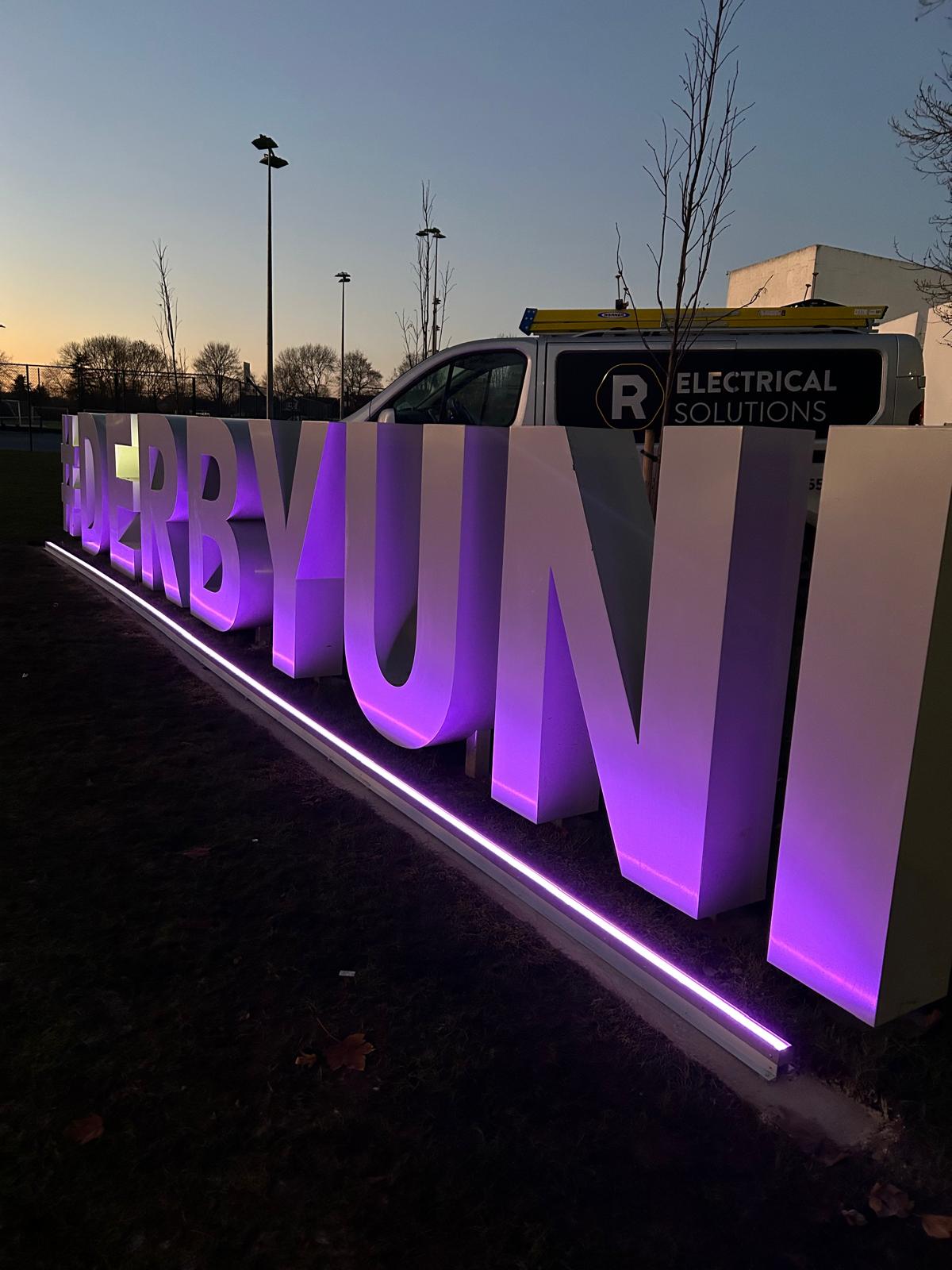
Book a free site review and we will tell you where your controls are costing you money and what it would take to correct it.
NAPIT Full Scope · Official Loxone Partner · 6-year workmanship guarantee on qualifying installations · £10m public liability