One press instead of six switches
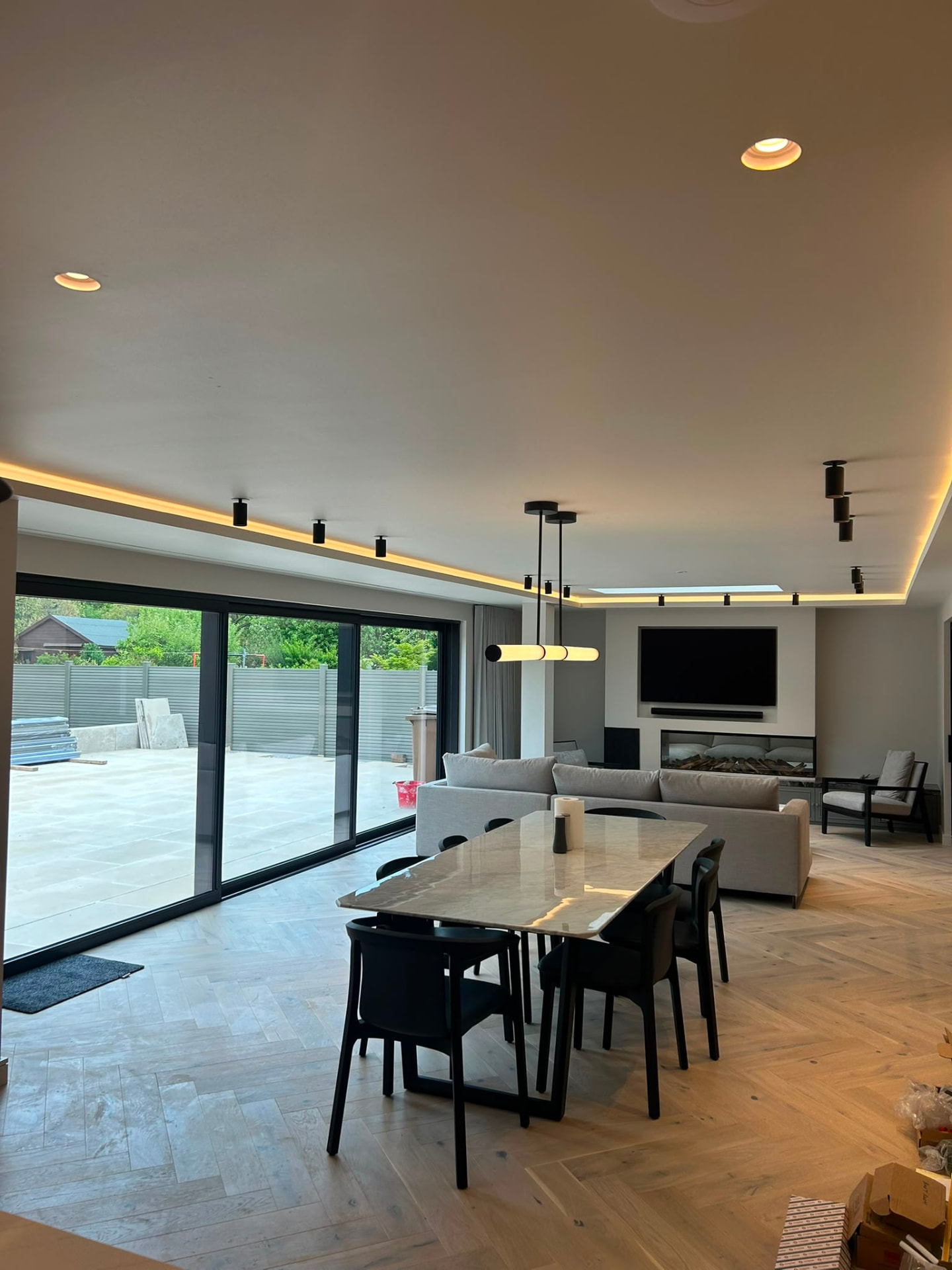
Cooking, dining, evening and away scenes recall instantly from a keypad by the door, so the room is right immediately rather than after a minute of adjustment.

Derby · Lighting design and control
Scene lighting, dimming and automated garden and façade circuits designed by the contractor who splits the circuits and programmes the keypads — so the light levels are right before anyone has to explain the app.
Official Loxone Partner, also designing on Lutron, Rako and DALI · 6-year NAPIT-backed workmanship guarantee on qualifying installations
16+ years
Domestic, commercial and industrial experience
Full Scope
NAPIT registered for all aspects of electrical work
6-year
NAPIT-backed workmanship guarantee on qualifying installs
£10m
Public and employers' liability cover
Free
Initial consultation, no obligation
The service
Lighting control means splitting the light in a room into layers — general, task, feature and accent — putting each layer on a dimmable circuit, then grouping those layers into scenes that a keypad, sensor, schedule or app can recall instantly. A kitchen goes from bright working light at eight in the morning to low warm perimeter light at nine in the evening without anyone adjusting six separate switches.
It works because of decisions made at first fix. Circuits split by function rather than by room, correct drivers matched to the fittings, neutral conductors at switch positions, and dimming protocols chosen for the load in front of them. Retrofitting a dimmer to circuits that were wired for a single on-off switch is how flicker, buzzing and dead bottom-ends get introduced.
We design and install on Loxone as an official partner, and on Lutron, Rako, ClickSmart and DALI where the keypad range, aesthetic or specification demands it. The same team splits the circuits, installs the dimmers, sets the trims for each fitting and programmes the scenes, so nobody can blame the next trade for the flicker.
What it costs to leave it
A grid of identical downlights on one switch is the default outcome when lighting is treated as an afterthought during first fix. It gives you one light level for cooking, homework, dinner and late evening, so the room only ever feels right by accident. Correcting it later means new circuits, new drivers and, in most cases, a re-skim of the ceiling you have just paid to decorate.
Mismatched dimming causes the second set of problems. LED lamps that flicker at low level, drivers that buzz audibly in a quiet room, a dimmer that cuts to black at thirty per cent, or fittings that all sit at slightly different brightness on the same scene. These are compatibility and trim issues, not faults in the lamps, and they are avoided at specification stage rather than fixed afterwards.
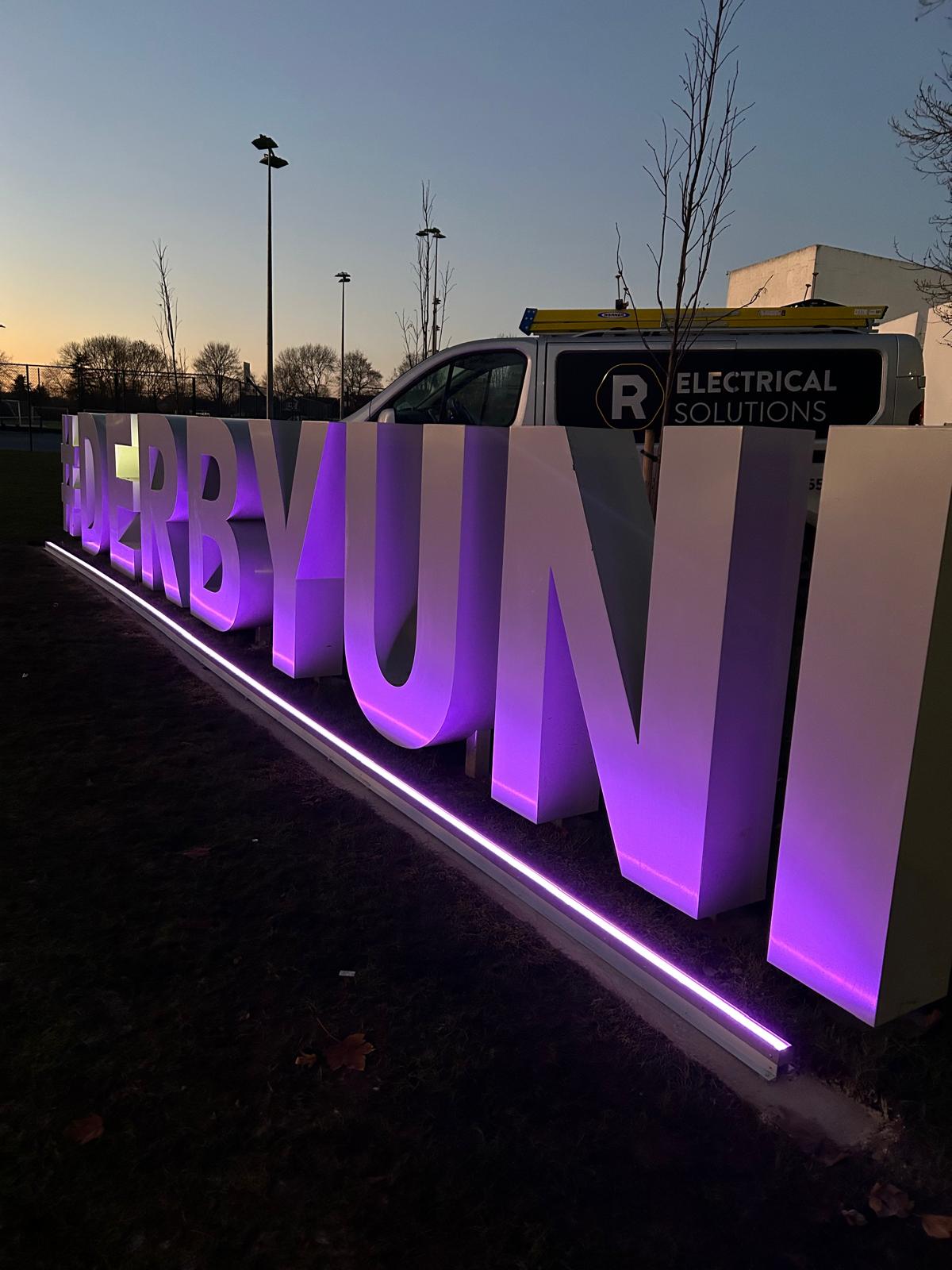
Outside, the common failure is timing. Timeclocks drift and need resetting twice a year, photocells fail in a way that leaves the garden lit all night, and manual switching means the front of the house is dark exactly when you arrive home. Every one of those wastes energy or leaves the property looking empty, and every one is solved by astronomical timing tied to your location.
How the job runs
01
We walk each room, look at how you use it through the day, and identify where layered light will actually change something rather than adding fittings for the sake of it.
02
Circuit splits, fitting schedule, driver and dimming protocol selection, keypad positions and a written scene list per room, agreed with you before anyone cuts a cable.
03
Dimmable circuits run and separated by function, neutrals delivered to switch positions, drivers located for access, external and garden circuits installed and protected.
04
Fittings, keypads and dimmer modules installed, then trims set per fitting and each scene tuned on site at the right time of day rather than to factory defaults.
05
Electrical testing and certification, every scene demonstrated and adjusted with you, and engraved or labelled keypads so the controls read the way the family thinks.
What you actually get
Cooking, dining, evening and away scenes recall instantly from a keypad by the door, so the room is right immediately rather than after a minute of adjustment.
Drivers and dimming protocols are matched to each fitting and trimmed on site, which removes the buzz, the flicker and the dead bottom-end that plague mismatched retrofits.
Scenes rarely run at full output, sensors switch off empty rooms and corridors, and external circuits only run between real dusk and real dawn instead of a guessed timeclock window.
Astronomical timing tracks sunset and sunrise for your location every day of the year, so the front of the house lights as you arrive without a photocell or a seasonal reset.
Correctly loaded, properly ventilated drivers in accessible positions last longer and are replaced without scaffold towers or lifted flooring when they eventually fail.
Qualifying installation work carries a 6-year NAPIT-backed guarantee, with a minimum one year on other work and maintenance available beyond that.
In detail
The right control protocol depends on the load, the fitting count and who maintains the space afterwards. Below is what we specify across homes, offices, retail and hospitality projects in Derby and the East Midlands, and why the choice changes between them.
Protocol selection follows the fittings and the building, not habit. Trailing-edge dimming suits most domestic LED loads; DALI earns its place where dozens of addressable fittings need individual control and fault reporting.
A scene is only as good as the layers available to it. We plan general, task, feature and accent light per room, then build scenes from those layers so each one has a clear purpose rather than being a random brightness.
Outdoor lighting fails for environmental reasons more than electrical ones. Correct IP ratings, gland selection, cable depth and drainage matter as much as the control strategy that switches it.
Homes optimise for atmosphere and simplicity of use. Commercial spaces optimise for compliance, energy reporting and the ability for a facilities team to make changes without an engineer on site.
Before you enquire
It depends entirely on the number of circuits, the fittings and whether the ceilings are already open. We do not publish prices because a headline figure would mislead you. The initial consultation is free and you receive a written quotation before committing.
A single room retrofit is usually one to three days. A whole-house scheme runs with the building programme: first fix wiring before plaster, then second fix and scene setting near completion. Scene tuning itself is typically a half day per floor.
Often, yes — where loft, floor void or riser routes exist, or where wireless-capable modules can be fitted behind existing switch plates that already have a neutral. We tell you at the consultation which rooms are realistic and which would need making good.
Almost always a mismatch between the dimmer and the driver, or a load below the dimmer's minimum. It is corrected by selecting the right dimming protocol for the fittings and setting a minimum trim per circuit, which we do on site during commissioning.
Yes. Systems are designed so keypads and local control continue to operate lighting locally, and logic runs on the controller inside the property rather than in a remote cloud service.
Quality drivers that are correctly loaded and ventilated typically run for many years; heat and overloading are what shorten them. We position drivers in accessible locations specifically so replacement is a short visit rather than a building job.
Yes, and most clients do once they have lived with them for a few weeks. Adjustments are usually made remotely under a maintenance package without needing a site visit.
Yes. Emergency lighting is designed, installed, tested and certified separately from the controlled lighting so it stays compliant and independently verifiable.
Qualifying installation work carries a 6-year workmanship guarantee backed by NAPIT, with a minimum one-year guarantee on other work. We hold £10m public liability and £10m employers' liability cover.
Derby, Duffield, Belper, Ilkeston, Long Eaton, Ripley, Ashbourne, Matlock, Burton upon Trent, Nottingham, Chesterfield, Sheffield and the surrounding East Midlands.
Related services
Where we work
Derby · Nottingham · Duffield · Belper · Burton upon Trent · Sheffield · Ilkeston · Long Eaton and the wider East Midlands. See areas covered, read more about the company or return to the homepage.
Lighting is the cheapest thing to design early and the most expensive to correct late. Book a free consultation and we will tell you exactly which circuits need splitting.
NAPIT Full Scope · Official Loxone Partner · 6-year workmanship guarantee on qualifying installations · £10m public liability